


About these picks
We make every game in this guide. These are recommendations from PaperFox’s own catalog, chosen for different kinds of play. Our Offline Games collection currently includes 22 games. Android test APKs and connected browser play are available; iPhone apps are coming soon.
| Game | Choose it when | Modes |
|---|---|---|
| Sudoku | You want to reason through a solo puzzle | Solo |
| Solitaire | You prefer a solo card game | Solo |
| Word Wheel | You would rather build words than place numbers | Solo |
| Mine Field | You like clues, risk and careful reveals | Solo |
| Tic-Tac-Toe | Two people want a compact turn-based board | Play the computer · 2 players on one phone |
| Four in a Row | Two people want a larger tactical board | Play the computer · 2 players on one phone |
| Ludo | You want dice and a race around a board | Play the computer · 2 players on one phone |
| Table Tennis | Two people want to control the game at once | Play the computer · 2 players on one phone |
Sudoku
You want to reason through a solo puzzle.
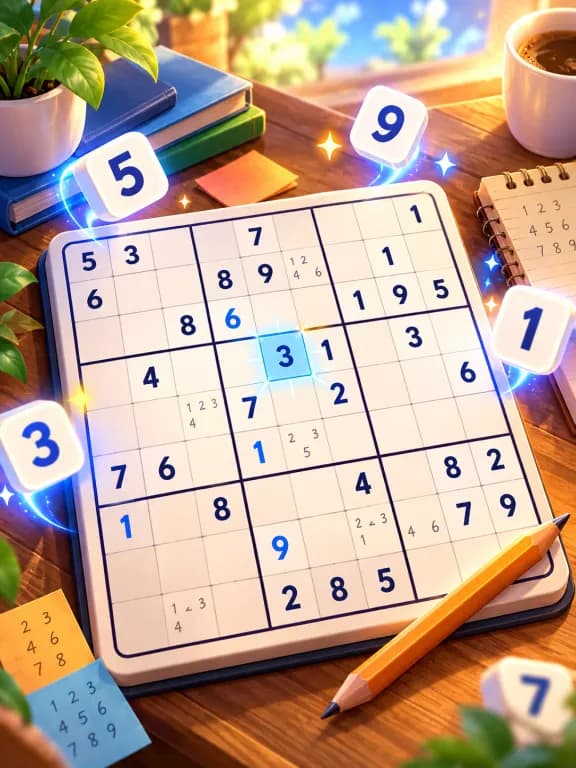
Choose Sudoku when you enjoy finding one justified move at a time. Its small board gives you a clear job: complete the rows, columns and boxes without repeating a digit. A difficult square can send you back to check a whole group, so it rewards attention rather than fast reactions.
Easy, Medium and Hard give you a choice of challenge. Notes let you keep possibilities separate from answers. If you are learning, start with a puzzle where you can explain a placement, then practise updating the affected candidates. Repeated guesses teach less than understanding a single deduction.
Keep in mind: Choose another game when you want a shared match.
Solitaire
You prefer a solo card game.
Solitaire suits someone who likes arranging cards and choosing which route to open next. In Klondike, a move can uncover a hidden card, free a useful column or advance a foundation. Those goals can compete, which makes looking one move ahead more useful than moving every card that happens to fit.
Start with draw one if you want straightforward access to the stock. Draw three changes which waste cards you can reach and makes the order of moves matter more. Our modes also differ in stock passes, so choose the rules you want before beginning rather than assuming every version allows unlimited redeals.
Keep in mind: A legal move does not guarantee that the deal can be finished.
Word Wheel
You would rather build words than place numbers.
Word Wheel is the solo choice here for people drawn to letters. It offers a different kind of search from Sudoku: instead of eliminating numbers, you look for words in the available letters. It fits a session where experimenting with combinations is part of the appeal.
Choose it over a reflex game when you want room to think about the next answer. If you are playing with someone else, discussing a word can be a shared activity, but the game’s supported mode is solo. A conversation around one puzzle is different from a built-in two-player match.
Keep in mind: Pick a board game when you want turn-taking with a friend.
Mine Field
You like clues, risk and careful reveals.
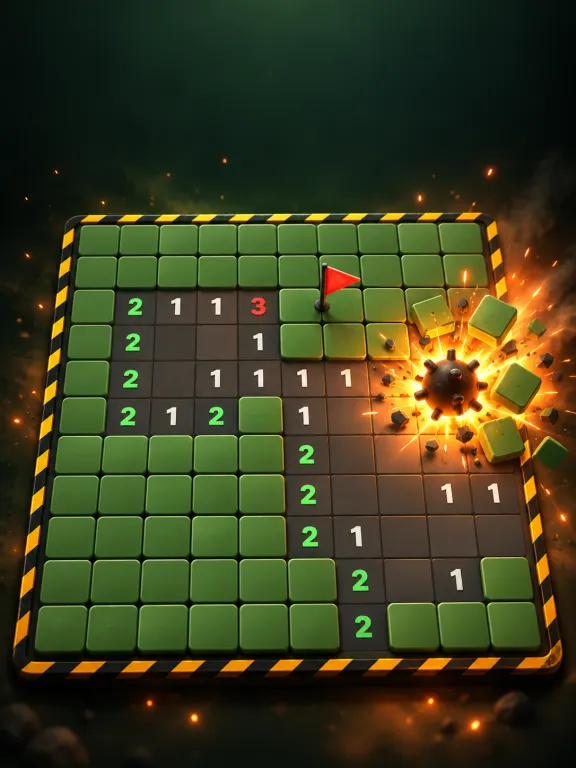
Mine Field is our minesweeper-style choice. Each revealed number describes nearby mines, including diagonal neighbours. The interesting decision is not how quickly you can tap, but which unopened square is justified by the clues you can already see.
A flag records a suspected mine; it does not turn a guess into a fact. Read the surrounding clues before clearing more squares, especially when using a numbered cell to reveal its remaining neighbours. It is a good change of pace from a large Sudoku grid, while still asking you to reason carefully.
Keep in mind: Flags are your deductions; an incorrect flag can mislead you.
Tic-Tac-Toe
Two people want a compact turn-based board.
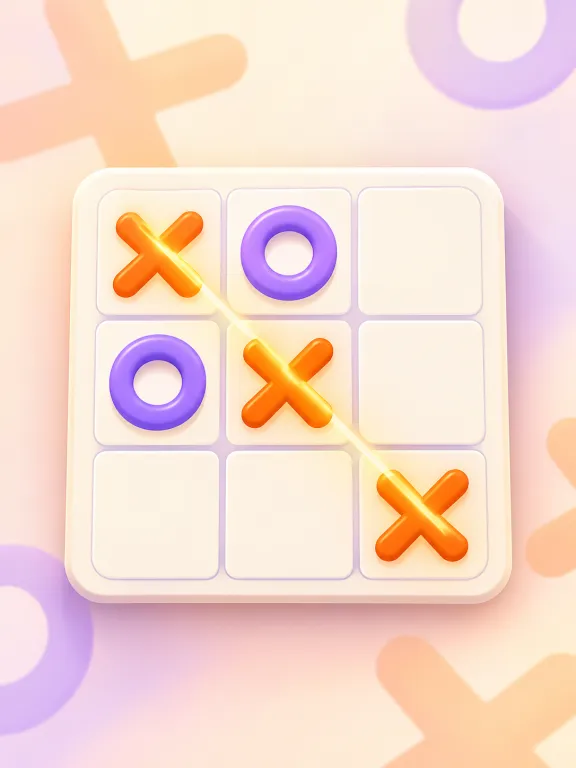
Tic-Tac-Toe is the simplest shared-board starting point in this selection. One person makes a move, then the other responds on the same phone. The small board makes the current position easy to discuss, and a finished round gives you a natural point to swap the starting player.
The depth is in noticing what the next move changes: an immediate win, a necessary block or a fork that threatens two lines. A draw is a valid result of good play. Choose this when you want a readable tactical exchange, and move to Four in a Row when you want a larger position to manage.
Keep in mind: Correct play from both players ends in a draw.
Four in a Row
Two people want a larger tactical board.
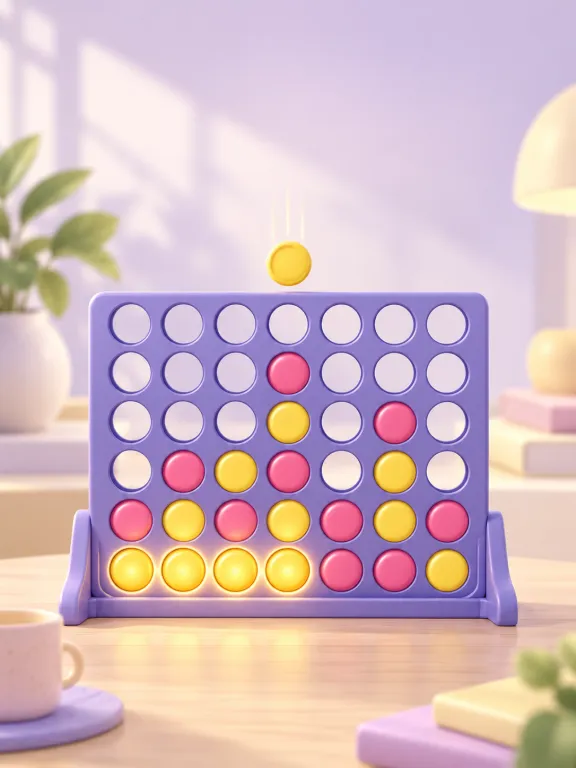
Four in a Row keeps the turn-taking of a board game but adds gravity. You choose a column, and the disc falls to its lowest open space. A promising diagonal is useful only when the required squares can actually be reached, so the shape of the board matters as much as the colour of the next disc.
Choose it when both players want to watch a position develop beyond a few moves. Look for the opponent’s immediate winning drop before chasing a longer plan. Shared play uses one device; there is no need to find a second phone just to take turns on this board.
Keep in mind: Discs fall to the lowest available space; threats need support.
Ludo
You want dice and a race around a board.
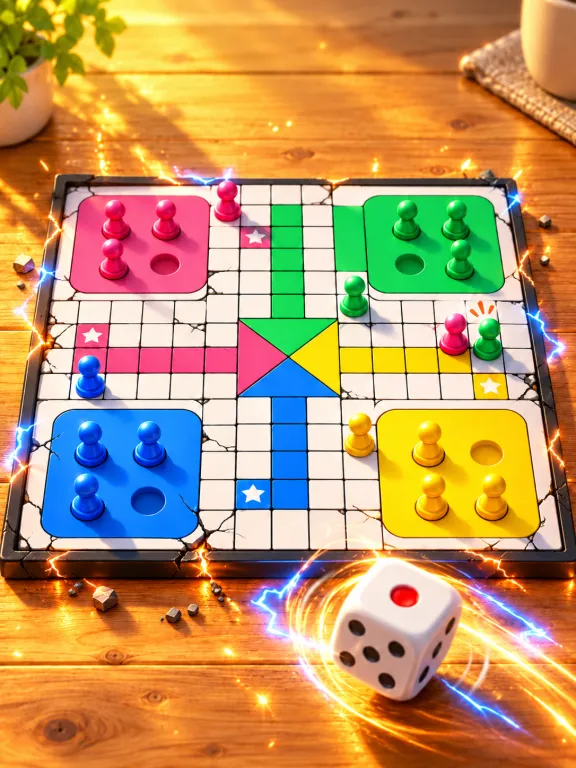
Ludo is the selection for a shared race with uncertain rolls. You decide which piece to move, whether to bring another piece out and how much exposure to accept. Safe squares and captures make the position worth checking even though the dice decide the distance.
Our friend mode supports two, three or four people taking turns on one phone. Agree on the mode and check our rules before starting, because households and other versions can treat protected pieces, extra rolls and consecutive sixes differently. It fits a group willing to follow turns around the board.
Keep in mind: Dice affect the race, so the next result is not fully under your control.
Table Tennis
Two people want to control the game at once.
Table Tennis changes the shared-phone experience from waiting for a move to reacting together. Each person controls a paddle on their side of the screen, so both can take part at the same time. Choose it when you want a direct exchange rather than a board to study between turns.
Try the shared controls while you still have a connection and make sure the phone position is comfortable for both players. A small screen and an awkward grip can matter more to your enjoyment than a game’s category. If simultaneous touches feel crowded, switch to a turn-based option such as Four in a Row.
Keep in mind: Both players need room to reach their side of the screen.
Choose the kind of session before the game
A useful shortlist starts with your company and attention. For one person, decide whether numbers, cards, letters or mine clues sound appealing. For a shared phone, decide whether you want alternate turns or simultaneous controls. Those choices narrow this list more effectively than treating every offline game as interchangeable.
Then think about how you will stop. A completed board is a convenient stopping point; a puzzle can ask you to remember more of the position. If interruptions matter, try closing and reopening your chosen game on your own installation before relying on it during a trip.
- One person: compare Sudoku, Solitaire, Word Wheel and Mine Field.
- Alternate turns: start with Tic-Tac-Toe, Four in a Row or Ludo.
- Play at once: try Table Tennis on a phone both people can comfortably reach.
Prepare Android play before losing your connection
Our installed Android collections run gameplay on the device. The studio website needs a connection to load a game. Prepare an Android installation before a flight or an area without reception, instead of expecting a website you have never opened to load there.
Download the test APK while connected, install it, open your chosen game and check its controls. Then turn off wifi and mobile data, or use airplane mode with wifi off, and try that installation again. Reopen it and check the mode you actually intend to use. This is a preparation checklist, not a claim that we tested your phone.
Optional video rewards need a connection. Plan your offline session around the game itself. The current Android downloads are test APKs; iPhone apps are coming soon. Connected browser play is available for trying a game before choosing an app.
- For travel-specific choices, see games for a plane or games for road-trip passengers.
Choose the collection that contains your picks
Offline Games currently contains 22 games and includes every selection above. Choose it when you want solo puzzles, words and cards alongside shared games. Duo Games focuses on the five same-phone games: Tic-Tac-Toe, Four in a Row, Ludo, Pool and Table Tennis.
These collections are free. Free does not mean every optional connected feature works without a network, and it should not be read as an ad-free promise. For this guide, the useful distinction is that the installed games support offline play while optional video rewards need connectivity.
Questions about offline Android games
- Which offline Android game should I start with? Choose Sudoku for a solo number puzzle, Solitaire for cards or Word Wheel for letters. For two people on one phone, choose a turn-based board such as Tic-Tac-Toe or simultaneous controls in Table Tennis. These are picks from PaperFox’s own catalog.
- Can two people play without wifi? Yes. Supported shared modes in the installed Android collections use one phone. Table Tennis lets both people control a paddle at once; Tic-Tac-Toe, Four in a Row, Ludo and Pool use turns. Browser play needs a connection to load.
- Does offline play mean no download is needed? The Android app must be downloaded and installed while you have a connection. Prepare and try the game before leaving. On the website, a connection is needed to load browser play.
- Are these Android games also available as iPhone apps? The iPhone apps are coming soon. The current downloads are Android test APKs. On an iPhone, you can try connected browser play.